Television remains the most powerful mass-reach advertising medium in India, with over 210 million TV households. But the definition of 'TV' is expanding rapidly. Connected TV (CTV) — streaming content viewed on internet-connected television sets — is creating a new advertising paradigm that blends the impact of TV with the targeting precision of digital.
The State of TV Advertising in India
Linear TV (traditional broadcast and cable) still commands the lion's share of TV ad spending in India, accounting for approximately ₹32,000 crore annually. However, CTV ad spending has surged 42% year-over-year, reaching ₹2,800 crore in 2024.
The driving forces behind CTV growth include rapid smart TV adoption (now in 30% of urban Indian homes), the expansion of ad-supported streaming tiers on platforms like JioCinema, Disney+ Hotstar, and SonyLIV, and improved CTV ad targeting capabilities.
Linear TV: The Mass Reach Play
Linear TV's greatest strength is its unmatched ability to reach massive audiences simultaneously. A single prime-time spot on a top Hindi GEC (General Entertainment Channel) can reach 50-80 million viewers. For brand launches, seasonal campaigns, and cultural moment marketing (cricket matches, festivals), linear TV remains irreplaceable.
However, linear TV's limitations are well-known: limited targeting beyond channel and daypart selection, no real-time performance data, high minimum investment requirements (a 10-second spot on a top channel during prime time costs ₹2-5 lakh), and growing audience fragmentation as viewers split across 800+ channels.
Connected TV: Precision Meets the Big Screen
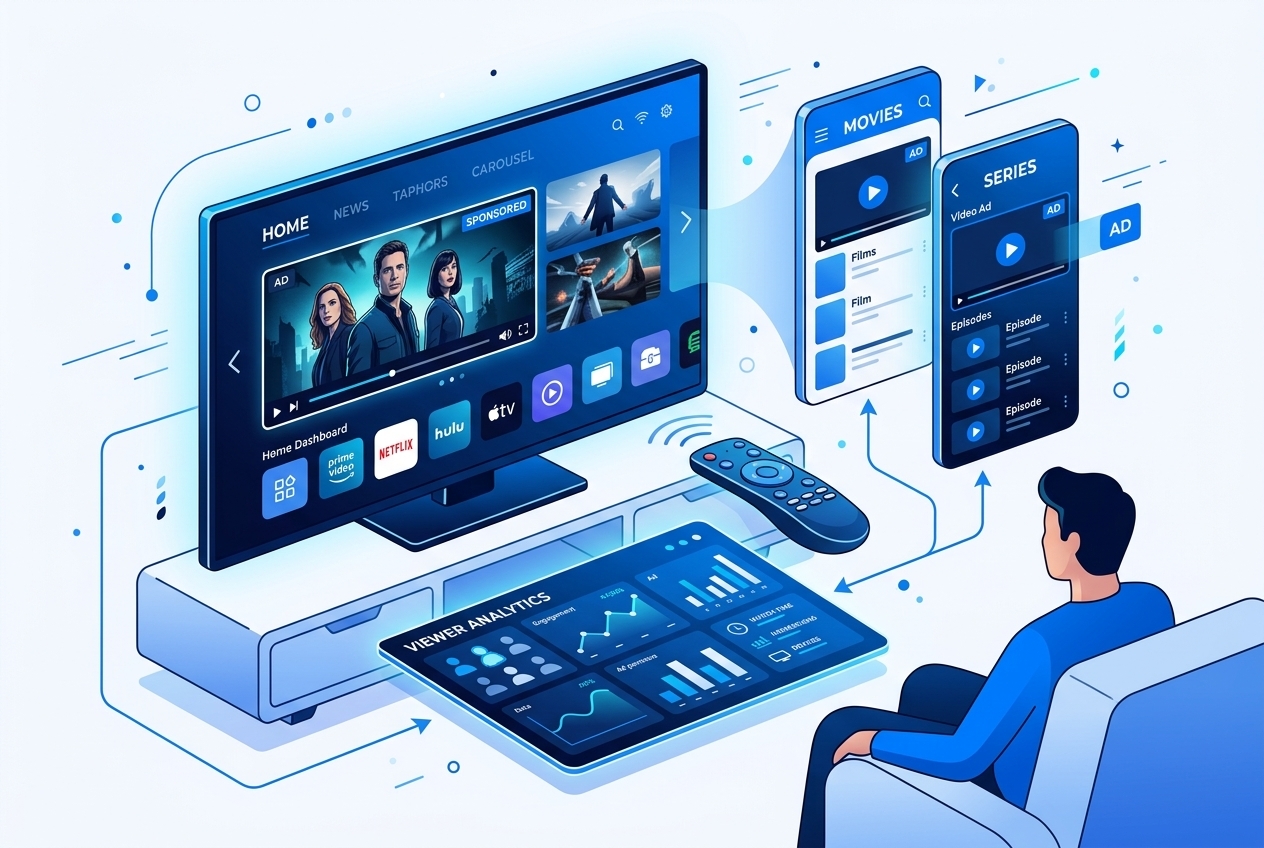
CTV addresses many of linear TV's limitations while preserving the big-screen viewing experience. Advertisers can target CTV viewers based on demographics, viewing behavior, purchase intent, and geographic location. Real-time reporting shows exactly how many people saw your ad, for how long, and what they did afterward.
CTV also offers more flexible buying models. Minimum spends are significantly lower than linear TV, making it accessible to mid-size brands and D2C companies. And unlike linear TV's fixed scheduling, CTV ads can be served dynamically based on audience availability.
Making the Right Choice for Your Campaign
The answer isn't either/or — it's understanding when each medium works best. Use linear TV when you need mass reach quickly, during live events, for building broad brand awareness, and when your target audience skews older or rural. Use CTV when you need precise audience targeting, want digital-like measurement, are running performance-oriented campaigns, and want to reach cord-cutters and younger demographics.
The most effective TV strategies in 2025 combine both: linear TV for broad reach and CTV for targeted frequency among high-value audience segments. This convergent approach delivers better overall campaign efficiency than either channel alone.