Influencer marketing has evolved from an experimental tactic to a core component of the marketing mix. In India alone, the influencer marketing industry is projected to reach ₹3,375 crore by 2026. Yet the most common question brands ask remains deceptively simple: 'Is this actually working?'
The challenge isn't a lack of data — it's knowing which metrics matter and how to connect influencer activity to business outcomes. This guide provides a comprehensive framework for measuring influencer marketing ROI that goes beyond vanity metrics.
Beyond Likes and Followers: The Metrics That Matter
The first mistake brands make is equating engagement (likes, comments, shares) with business impact. While engagement indicates audience interest, it doesn't tell you whether people actually bought your product or remembered your brand.
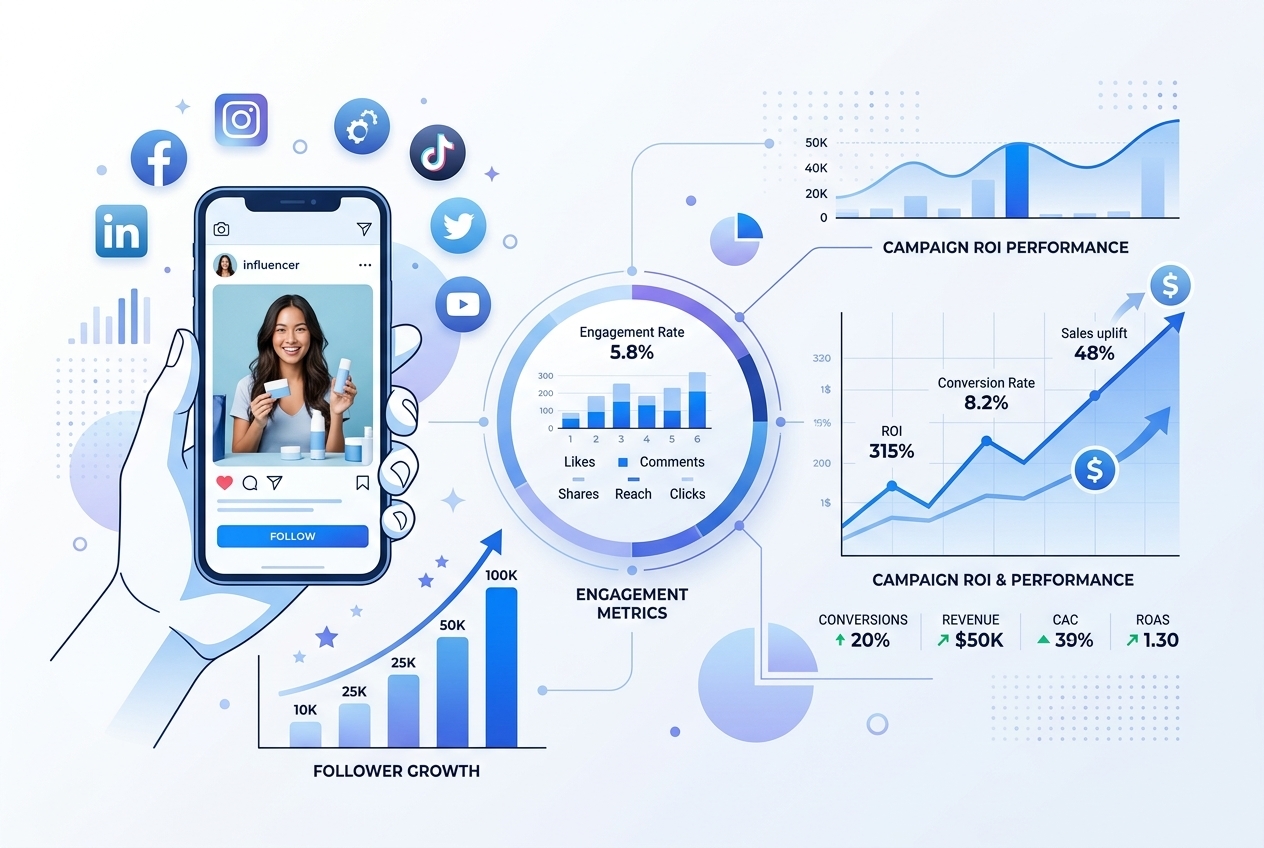
A proper ROI framework should track metrics across three tiers. At the top, awareness metrics like reach, impressions, and brand mention volume tell you how many people saw your message. In the middle, engagement metrics like saves, shares, click-through rates, and website traffic show who interacted meaningfully. At the bottom, conversion metrics like coupon code redemptions, affiliate link purchases, lead form submissions, and direct sales tie activity to revenue.
Attribution Models for Influencer Campaigns
Single-touch attribution — giving all credit to the last click — dramatically undervalues influencer marketing. Most influencer content works at the top of the funnel, introducing consumers to your brand long before they convert.
Multi-touch attribution models distribute credit across all touchpoints in the customer journey. For influencer campaigns, consider using a time-decay model that gives more weight to touchpoints closer to conversion while still crediting the initial influencer exposure.
Google Analytics 4's data-driven attribution model is particularly useful here, as it uses machine learning to determine how much credit each touchpoint deserves based on actual conversion patterns.
Setting Up Proper Tracking
Effective measurement starts before the campaign launches. Every influencer should receive unique tracking assets: custom UTM parameters for link tracking, dedicated promo codes or coupon codes for purchase attribution, branded hashtags for social listening, and landing pages specific to each influencer or campaign.
For Instagram Stories and Reels — where direct links aren't always possible — use custom link-in-bio tools that redirect through your tracking infrastructure. Platforms like GrahakFlow can help automate this process across multiple influencers simultaneously.
Calculating True ROI
The basic ROI formula is simple: (Revenue Generated - Campaign Cost) / Campaign Cost × 100. But for influencer marketing, you need to account for several additional factors.
Include all costs: influencer fees, product gifting, content production, agency fees, and platform costs. On the revenue side, track both direct sales (attributable through tracking links and codes) and estimated brand lift (measured through brand awareness surveys, search volume changes, and social mention sentiment).
Industry benchmarks suggest that well-executed influencer campaigns in India deliver an average ROI of 5.2x, meaning every ₹1 spent generates ₹5.20 in earned media value. However, this varies significantly by industry, influencer tier, and campaign objectives.
Building a Long-Term Measurement Culture
The most successful brands don't measure influencer ROI campaign-by-campaign. They build always-on measurement frameworks that track brand health metrics continuously, correlating them with influencer activity over time. This approach reveals the compounding effect of consistent influencer partnerships — something single-campaign analysis will always miss.